Musée Picasso
The largest Picasso collection anywhere, in a Marais mansion
- Area Le Marais
- Type Museum
- Time needed 1h 30m
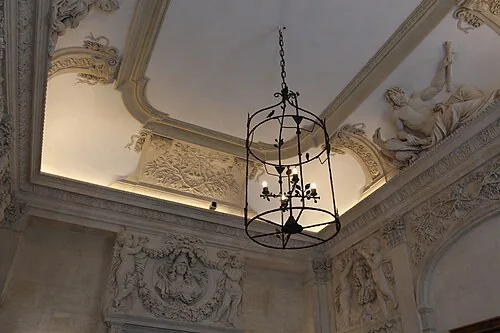
The Musée Picasso holds the largest public collection of Picasso's work anywhere, around 5,000 pieces, assembled from the two settlements his heirs made with the French state in lieu of inheritance tax in 1979 and 1990. It is in the Hôtel Sale, a mid-seventeenth-century Marais mansion built for a salt-tax collector, which was restored and reopened in 2014. Because the holding is so large, the display rotates and is rehung regularly rather than shown as a fixed permanent route. It covers the whole career, from the teenage academic work to the late paintings, and includes his sculpture, prints, notebooks and his own collection of other artists.
Open in the planner →Getting there
Saint-Paul on Métro line 1 is about an 8 minute walk north through the Marais and is roughly 5 minutes from Châtelet. Chemin Vert on line 8 and Saint-Sebastien–Froissart on line 8 are each 5 to 6 minutes away on the north side, and Rambuteau on line 11 is about 10 minutes from the west. Coming on foot from the Centre Pompidou takes about 15 minutes through the Marais streets, which is a pleasant approach. The entrance is on the rue de Thorigny; from the Métro the last stretch is through narrow streets, so the mansion appears suddenly.
What you see
Start with the building: a stone courtyard behind a carriage gate, then a famous double-ramped staircase with a heavily carved vault that is worth a minute before any painting. The hang changes, so treat the following as what the collection reliably contains rather than a room order. The early rooms usually run from the Barcelona academic studies and the Blue Period, through the Cubist still lifes with their newspaper and chair caning, to the large classical-period bathers and portraits of the 1920s. Sculpture is one of the real strengths here and is spread through the floors: the plaster and bronze heads of Marie-Therese, the assembled and welded pieces, the Bull's Head made from a bicycle saddle and handlebars, and the goat. The attic floor is normally given to graphic work, notebooks and photographs, which show the working process better than the finished canvases do. Somewhere in the route you will find his personal collection, with works by Cezanne, Matisse, Rousseau, Degas and others that he bought or swapped, and that is a quietly revealing room.
What to pair it with
Place des Vosges is about five minutes south-east on foot. The Musée Carnavalet is five minutes away in the other direction, and the Centre Pompidou is fifteen minutes west.
When to go
Weekday mornings at opening are the calmest. It closes one day a week, usually Monday, and the Marais as a whole is a Sunday destination, so Sunday afternoon is the busiest the museum gets. Because the hang rotates there is no best season for the collection itself, but check what is currently shown before going if there is a particular work you want, since it may not be out. The building's windows give good light on the upper floors in the afternoon.
What is hard about it
The rotating hang is the main thing to understand: there is no guarantee that any given famous painting is on display, and people who come for one specific work are regularly disappointed. The historic mansion means stairs, tight stairwells and rooms that congest quickly; lift access exists but the circulation is awkward. Signage inside is sparse and the route is not obvious, so it is easy to miss a floor. Timed tickets are normally needed and the courtyard queue is slow when a temporary show is on. The 2014 restoration divides opinion, and some visitors find the white gallery interiors at odds with the building they came through.
Common questions
How long do you need at the Musée Picasso?
Around 90 minutes for the current hang at a steady pace, longer if the graphic work and notebooks interest you. Two hours covers it thoroughly.
Will Guernica or a particular famous work be there?
Guernica is in Madrid and is not part of this collection. The display here rotates from a very large holding, so check the current hang before travelling for any single work.
Is the Marais worth combining with it?
Yes. Place des Vosges, the Musée Carnavalet and the streets around the rue des Francs-Bourgeois are all within ten minutes, which makes an easy half-day.
Nearby
- Place des VosgesThe oldest planned square in Paris, arcaded in red brick
- Musée CarnavaletThe history of Paris itself, free, in two Marais mansions
More of the same kind
- LouvreThe largest art museum on earth, in a palace, behind a glass pyramid
- Musée d'OrsayImpressionism in a converted railway station, under the great clock
- Centre PompidouModern art behind the inside-out pipes of Rogers and Piano
- Musée RodinThe Thinker and the Gates of Hell in a mansion with a sculpture garden
Part of these routes
- Le MaraisThe quarter the nineteenth century forgot to rebuild: mansions, squares and two fine museums.
- Paris in five daysA fuller first visit: the island, the Louvre, the Left Bank, Montmartre and Versailles.
- Paris at lengthEverything the other routes cover, spread over unhurried days with nothing rushed.