Musée Marmottan Monet
The largest Monet collection, including Impression, Sunrise
- Area 16th arrondissement
- Type Museum
- Time needed 1h 30m
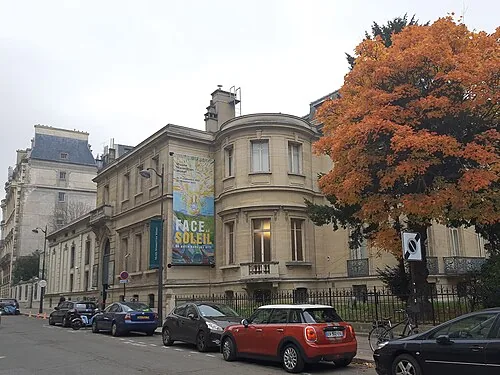
The Musée Marmottan Monet, in a nineteenth-century hunting lodge turned private mansion near the Bois de Boulogne in the 16th arrondissement, holds the largest collection of works by Claude Monet anywhere, left to the Académie des beaux-arts by the painter's son Michel in 1966. Among them is Impression, Soleil levant, the 1872 canvas whose title gave Impressionism its name. The house also keeps Paul Marmottan's own Empire furniture, a collection of medieval illuminations, and a group of Berthe Morisot paintings that is the largest in existence.
Open in the planner →Getting there
La Muette on Métro line 9 is about a ten-minute walk through the Jardin du Ranelagh; from Chatelet it is roughly 20 minutes on line 9 with no change. Boulainvilliers on RER C is a similar walk from the other side, and useful if you are coming from the Left Bank. Bus 32 stops close to the museum gates on the avenue Raphael. The walk from La Muette is pleasant but signposting is poor, so follow the park rather than the main road.
What you see
The ground floor is the house as Paul Marmottan furnished it: Empire and Consulate furniture, bronzes, a dining room and salons with Napoleonic portraits, which most visitors walk through faster than it deserves. Upstairs is the illuminated manuscript collection, small leaves and initials in cases, and rooms given to Morisot, with family portraits and garden scenes that make the case for her as well as any museum does. The Monets are in a purpose-built room downstairs in the basement, reached by a staircase from the hall: around a hundred works from the Giverny years, the wisteria and weeping willow canvases, several of the late water-lily panels in loose, almost abstract paint, and Impression, Soleil levant itself, usually hung on its own. Temporary exhibitions take over the upper floors and are often the reason local visitors return.
What to pair it with
The Jardin du Ranelagh is on the doorstep and the Bois de Boulogne begins a few minutes west, with the Fondation Louis Vuitton further in. The Musée Guimet and the Palais de Tokyo are fifteen minutes east on line 9 towards Trocadéro.
When to go
Weekday mornings shortly after opening are much the best, especially for the Monet room, which is small and gets congested. Big temporary shows here sell out and bring queues at weekends, so timed online booking is worth having. The museum closes one day a week. The walk through the Ranelagh gardens is at its best in spring and autumn.
What is hard about it
It is out on the edge of the city and takes real effort to reach, which is the main objection. The Monet basement is a single low-ceilinged room and can feel crowded and airless when a coach group arrives; the late water-lily canvases are hung close together and are hard to stand back from. Labelling is sparse and there is little interpretation. Works go out on loan regularly, so a specific painting, including the Impression, may not be on the wall when you come — worth checking if you are travelling for it. The house is not fully step-free and the Paris Museum Pass is not accepted here.
Common questions
How long do you need at the Musée Marmottan Monet?
About 90 minutes for the whole house. An hour is enough if you only want the Monet and Morisot rooms.
Is Impression, Soleil levant always on display?
Usually, but not guaranteed — it travels to exhibitions abroad. Check the museum's website before making the trip specifically for it.
Is it better than the Musée de l'Orangerie for Monet?
They differ. The Orangerie has the great curved water-lily rooms; the Marmottan has far more paintings and the Morisot collection, in a domestic setting.
Nearby
- Bois de BoulogneThe city's western wood, with lakes, gardens and racecourses
- Palais de TokyoRaw concrete halls given over to contemporary art, open late
- Place du TrocadéroThe terrace that frames the Eiffel Tower across the river
More of the same kind
- LouvreThe largest art museum on earth, in a palace, behind a glass pyramid
- Musée d'OrsayImpressionism in a converted railway station, under the great clock
- Centre PompidouModern art behind the inside-out pipes of Rogers and Piano
- Musée RodinThe Thinker and the Gates of Hell in a mansion with a sculpture garden