Musée de l'Orangerie
Monet's Water Lilies in two oval rooms built for them
- Area Tuileries
- Type Museum
- Time needed 1h 15m
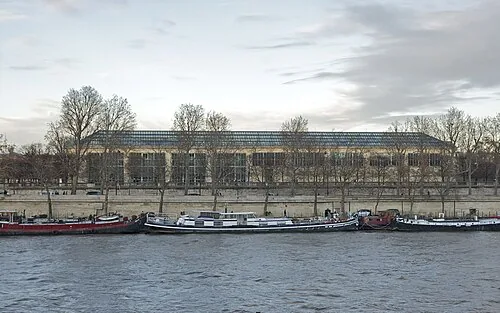
The Musée de l'Orangerie stands in the south-west corner of the Tuileries Garden, in a glasshouse built in 1852 to overwinter the garden's orange trees. It exists principally for eight of Monet's large Water Lilies panels, which he gave to the state in 1922 and which are installed in two oval rooms designed to his own instructions, lit from above and curved so the paintings wrap round the viewer. Below them is the Walter-Guillaume collection, about 140 works by Renoir, Cezanne, Matisse, Modigliani, Picasso, Soutine and others. It is small enough to see properly in a little over an hour.
Open in the planner →Getting there
Concorde on Métro lines 1, 8 and 12 is the nearest station, about 5 minutes on foot through the garden gate, and roughly 7 minutes from Châtelet on line 1. Tuileries on line 1 is a 7 to 8 minute walk along the garden's north side. The entrance faces the Seine side of the garden near the Place de la Concorde, which catches people out: if you arrive at the Jeu de Paume pavilion you are on the wrong side of the gate and need to cross to the river side.
What you see
The route is fixed and it is the right one. You pass through two plain white antechambers that strip away the daylight, then into the first oval room, where four panels run continuously round the walls: Morning, Clouds, Green Reflections and Sunset. The second oval beyond it holds four more, including the two with the weeping willow trunks that break the water surface. Both rooms are naturally lit through the ceiling, the benches are in the middle, and the thing to do is sit rather than walk. Then take the stairs down to the Walter-Guillaume rooms, which are hung densely and chronologically: a substantial group of Renoir late figures, a set of Cezanne still lifes and portraits, Rousseau's flat jungle and portrait canvases, Soutine's landscapes and carcasses, Modigliani portraits including Paul Guillaume himself, Derain and Utrillo, and a group of Picasso figures from the classical period. A temporary exhibition space sits off the lower floor.
What to pair it with
The Tuileries Garden surrounds it and the Place de la Concorde is at its gate. The Musée d'Orsay is a twelve-minute walk across the footbridge, and the two Monet collections work well as a pair. The Jeu de Paume photography gallery is on the opposite side of the same gate.
When to go
First entry of the day is far the best, because the oval rooms only work when they are quiet and twenty people with phones destroys the effect. The middle of the day, especially at weekends and in school holidays, is when the rooms are at their worst. The museum closes one day a week, normally Tuesday. The overhead light changes the paintings through the day and with the weather; an overcast morning is kinder than harsh noon sun. Expect the heaviest crowds in July and August.
What is hard about it
The Water Lilies rooms are frequently full and the hush they need is rarely there; this is the chief complaint about the place. There is normally a security queue outside even with a timed ticket, and the museum has no cloakroom space to speak of for large bags. The collection is genuinely small, so anyone expecting a Monet museum on the scale of Orsay or Marmottan will be through it quickly and may feel the admission steep for the time. Booking a slot online is normally needed in high season, and the museum sells a combined ticket with Orsay which only pays off if you do both within a short window. The lower galleries have no natural light and can feel airless when busy.
Common questions
How long do you need at the Musée de l'Orangerie?
About 75 minutes: half an hour or so in the two oval rooms and the rest downstairs. It is one of the few Paris museums you can see completely in a single visit.
Is this the same as the Water Lilies at the Musée Marmottan?
No. The Orangerie has the eight large panels Monet designed for these specific oval rooms; Marmottan holds a different and largely smaller group of his work, in the 16th arrondissement.
Do you need to book ahead?
Timed online booking is normally advisable and in the busy months effectively necessary. Walk-up entry exists but means queueing outside.
More of the same kind
- LouvreThe largest art museum on earth, in a palace, behind a glass pyramid
- Musée d'OrsayImpressionism in a converted railway station, under the great clock
- Centre PompidouModern art behind the inside-out pipes of Rogers and Piano
- Musée RodinThe Thinker and the Gates of Hell in a mansion with a sculpture garden